Management of Diabetes in Long-term Care and Skilled Nursing Facilities: A Position Statement of the American Diabetes Association

Abstract
Diabetes is more common in older adults, has a high prevalence in long-term care (LTC) facilities, and is associated with significant disease burden and higher cost. The heterogeneity of this population with regard to comorbidities and overall health status is critical to establishing personalized goals and treatments for diabetes. The risk of hypoglycemia is the most important factor in determining glycemic goals due to the catastrophic consequences in this population. Simplified treatment regimens are preferred, and the sole use of sliding scale insulin (SSI) should be avoided. This position statement provides a classification system for older adults in LTC settings, describes how diabetes goals and management should be tailored based on comorbidities, delineates key issues to consider when using glucose-lowering agents in this population, and provides recommendations on how to replace SSI in LTC facilities. As these patients transition from one setting to another, or from one provider to another, their risk for adverse events increases. Strategies are presented to reduce these risks and ensure safe transitions. This article addresses diabetes management at end of life and in those receiving palliative and hospice care. The integration of diabetes management into LTC facilities is important and requires an interprofessional team approach. To facilitate this approach, acceptance by administrative personnel is needed, as are protocols and possibly system changes. It is important for clinicians to understand the characteristics, challenges, and barriers related to the older population living in LTC facilities as well as the proper functioning of the facilities themselves. Once these challenges are identified, individualized approaches can be designed to improve diabetes management while lowering the risk of hypoglycemia and ultimately improving quality of life.

Introduction
The epidemic growth of type 2 diabetes in the U.S. has disproportionately affected the elderly. In 2012, the prevalence of diabetes among people aged ≥65 (25.9%) was more than six times that of people aged 20–24 years (4.1%) (1). In the long-term care (LTC) population, the prevalence of diabetes ranges from 25% to 34% across multiple studies (2–4). The high prevalence of diabetes among older adults has contributed to the unsustainable growth of health care costs in the U.S. The estimated total cost of diabetes in 2012 was $245 billion. Average medical expenditures for people with diagnosed diabetes were 2.3 times higher than among people without diabetes. LTC costs for people with diabetes were estimated at $19.6 billion in 2012 (5).
The high prevalence of diabetes in older adults is due to age-related physiological changes, such as increased abdominal fat, sarcopenia, and chronic low-grade inflammation, that lead to increased insulin resistance in peripheral tissues and relatively impaired pancreatic islet function (6). Diabetes increases the risk of cardiovascular and microvascular complications but also increases the risk of common geriatric syndromes, including cognitive impairment, depression, falls, polypharmacy, persistent pain, and urinary incontinence (7,8). The older diabetes population is highly heterogeneous in terms of comorbid illnesses and functional impairments. These characteristics have frequently been used to exclude older individuals from randomized clinical trials. The heterogeneity of the population and the lack of clinical trial data represent challenges to determining standardized intervention strategies that can work for all older adults with diabetes. As the vast majority of the patients with diabetes in LTC facilities have type 2 diabetes, most recommendations in this position statement are directed toward that population. However, we have suggested specific recommendations for patients with type 1 diabetes when appropriate.

To see original article, Click HERE

Brenda Schlesinger MSN, APRN, CDE
American Diabetes Education LLC
americandiabeteseducation.net
Brendascde@gmail.com
Office:  215.208.8474
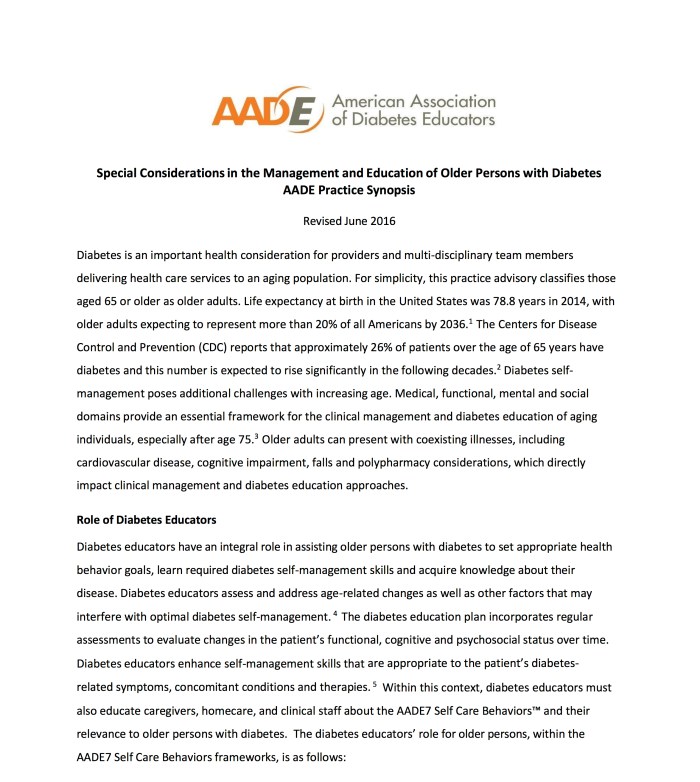
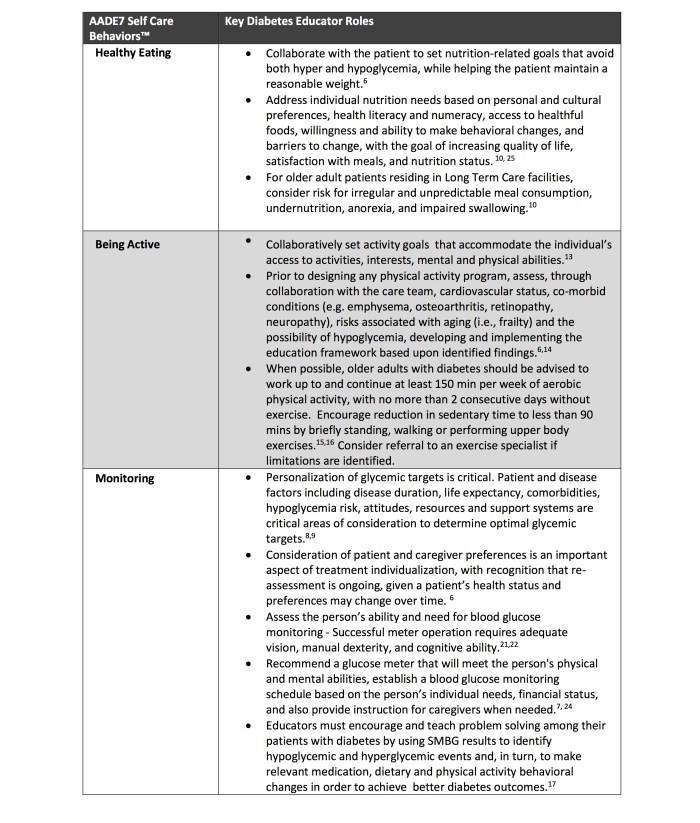
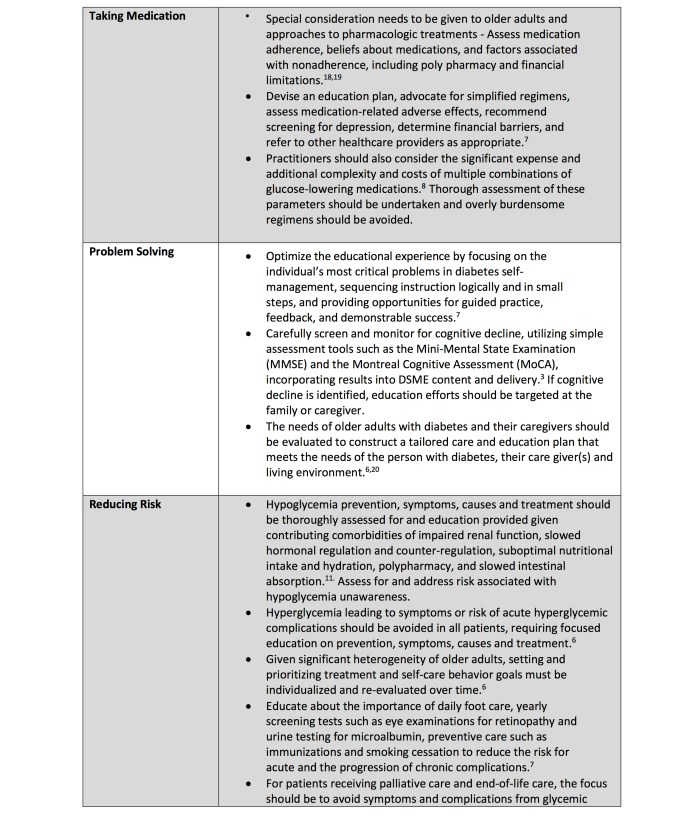
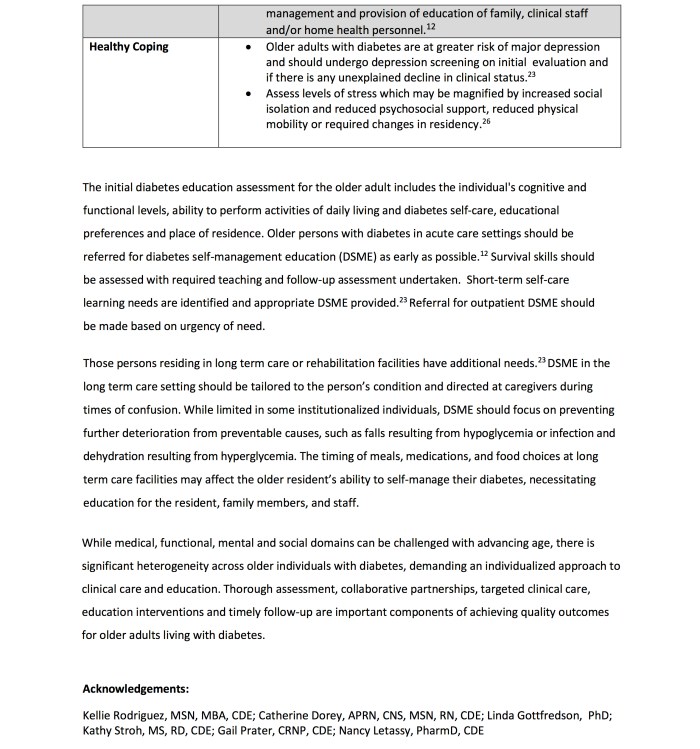
Special Considerations in the Management and Education of Older Persons with Diabetes

1-special-considerations-in-the-management-of-older-persons-with-diabetes2-special-considerations-in-the-management-of-older-persons-with-diabetes3-special-considerations-in-the-management-of-older-persons-with-diabetes4-special-considerations-in-the-management-of-older-persons-with-diabetes

References 

  1. National Center for Health Statistics. Health, United States, 2015: With Special Feature on Racial and Ethnic Health Disparities. Hyattsville, MD. 2016.
  2. Centers for Disease Control and Prevention. National diabetes statistics report: estimates of diabetes and its burden in the United States, 2014 [Internet]. Available at: http://www.cdc.gov/diabetes/data/statistics/2014statisticsreport.html. Accessed 18 May, 2016.
  3. Kirkman MS, Briscoe VJ, Clark N, et al. Diabetes in older adults. Diabetes Care. 2012;35: 2650–2664
  4. Funnell MM, Brown TL, Childs BP, et al. National standards for diabetes self-management education. Diabetes Care. 2012;35 Suppl 1:S101-108.
  5. AADE. Measurable behavior change is the desired outcome of diabetes education Available at:
    http://medicine.emory.edu/documents/endocrinology-diabetes-aade7-self-care-
    behaviors.pdf Accessed 6/3/2016.
  6. American Diabetes Association. Standards of Medical Care in Diabetes. Diabetes Care. 2016; 3
    (Supplement 1): S1-112.
  7. AADE. The Art and Science of Diabetes Self-Management Education: A Desk Reference for
    Healthcare Professionals, 3rd Ed. Chicago, Illinois: American Association of Diabetes Educators;
    2014.
  8. Inzucchi SE, Bergenstal RM, Buse JB, Diamant M et al. Management of Hyperglycemia in Type 2
    Diabetes, 2015: A Patient-Centered Approach. Update to a Position Statement of the American Diabetes Association and the European Association for the Study of Diabetes. Diabetes Care. 2015;38:140–149.
  9. Ismail-Beigi F, Moghissi E, Tiktin M, Hirsch IB, Inzucchi SE, Genuth S. Individualizing glycemic targets in type 2 diabetes mellitus: implications of recent clinical trials. Ann Intern Med. 2011;154:554–559
  10. Dorner B, Friedrich EK, Posthauer ME. Practice paper of the American Dietetic Association: Individualized nutrition approaches for older adults in health care communities. J Am Diet Assoc. 2010;110:1554–1563.
  11. Migdal A, Yarandi SS, Smiley D, Umpierrez GE. Update on diabetes in the elderly and in nursing home residents. J Am Med Dir Assoc. 2011;12:627–632.e2
  12. Sinclair A, Dunning T, Colagiuri S. Managing older people with type 2 diabetes: Global guideline. International Diabetes Federation, 2013
  13. Colberg SR, Sigal RJ, Fernhall B, et al.; American College of Sports Medicine; American care.diabetesjournals.org Foundations of Care and Comprehensive Medical Evaluation S33 Diabetes Association. Exercise and type 2 diabetes: the American College of Sports Medicine and the American Diabetes Association: joint position statement. Diabetes Care. 2010;33: e147–e167
  14. Bird SR, Hawley JA. Exercise and type 2 diabetes: new prescription for an old problem. Maturitas. 2012;72(4):311-316.
  15. Katzmarzyk PT, Church TS, Craig CL,Bouchard C. Sitting time and mortality from all causes, cardiovascular disease, and cancer. Med Sci Sports Exerc. 2009;41:998–1005
  16. U.S. Department of Health and Human Services. 2008 physical activity guidelines for Americans [Internet], 2008. Available at: http://www.health.gov/paguidelines/guidelines/default.aspx. Accessed May 31st 2016.
  17. Wang J, Zgibor J, Matthews JT et al. Self-Monitoring of Blood Glucose Is Associated With Problem- Solving Skills in Hyperglycemia and Hypoglycemia. Diabetes Educ. March/April 2012; vol. 38, 2: pp. 207-218.
  18. Valencia WM, Florez H. Pharmacological treatment of diabetes in older people. Diabetes Obes Metab. 2014;16:1192–1203
  19. Munshi MN, Maguchi M, Segal AR. Treatment of type 2 diabetes in the elderly. Curr Diab Rep. 2012;12(3):239-245.
  20. Association AP. Why practitioners need information about working with older adults Available at: http://www.apa.org/pi/aging/resources/guides/practitioners.pdf. Accessed May 31st, 2016.
  1. American Association of Diabetes Educators. Diabetes and disabilities. Diabetes Educ. 2012;38(1):133-136.
  2. McAndrew L, Schneider SH, Burns E, et al. Does patient blood glucose monitoring improve diabetes control? A systematic review of the literature. Diabetes Educ. 2007;33(6):991-1011; discussion 1012-1013
  3. American Geriatrics Society Expert Panel on the Care of Older Adults with Diabetes. Mellitus Guidelines Abstracted from the American Geriatrics Society Guidelines for Improving the Care of Older Adults with Diabetes Mellitus: 2013 Update. J Am Geriatr Soc. 2013; 61(11): 2020-2026.
  4. Fisher WA, Kohut T, Schachner H, et al. Understanding self-monitoring of blood glucose among individuals with type 1 and type 2 diabetes: an information-motivation-behavioral skills analysis.
    Diabetes Educ. 2011;37(1):85-94.
  5. Bernstein M, Munoz N. Position of the academy of nutrition and dietetics: food and nutrition for
    older adults: promoting health and wellness. J Acad Nutr Diet. 2012;112(8):1255-1277.
  6. Johnson EL BJ, Soule M, Kolberg J. Treatment of Diabetes in Long-Term Care Facilities: A Primary
    Care Approach. Clinical Diabetes. 2008;26(4):152-156


to read original article, click HERE